BOTSWANA’S HUNTING COMMUNITIES MEET TO PLAN COMPLIANCE WITH STRICT LION HUNTING REGULATIONS

Oshinka Tsiang
Maun: Community Based Organisations (CBOs) met in Maun last week to discuss how best they can successfully comply with very stringent conditions demanded by an Experimental Special Lion Quota issued by the Department of Wildlife and National Parks (DWNP) for the 2026 hunting season. The special quota is issued to nine CBOs and the Farmers Associations (NG39) under the Wildlife Conservation and National Parks Act.
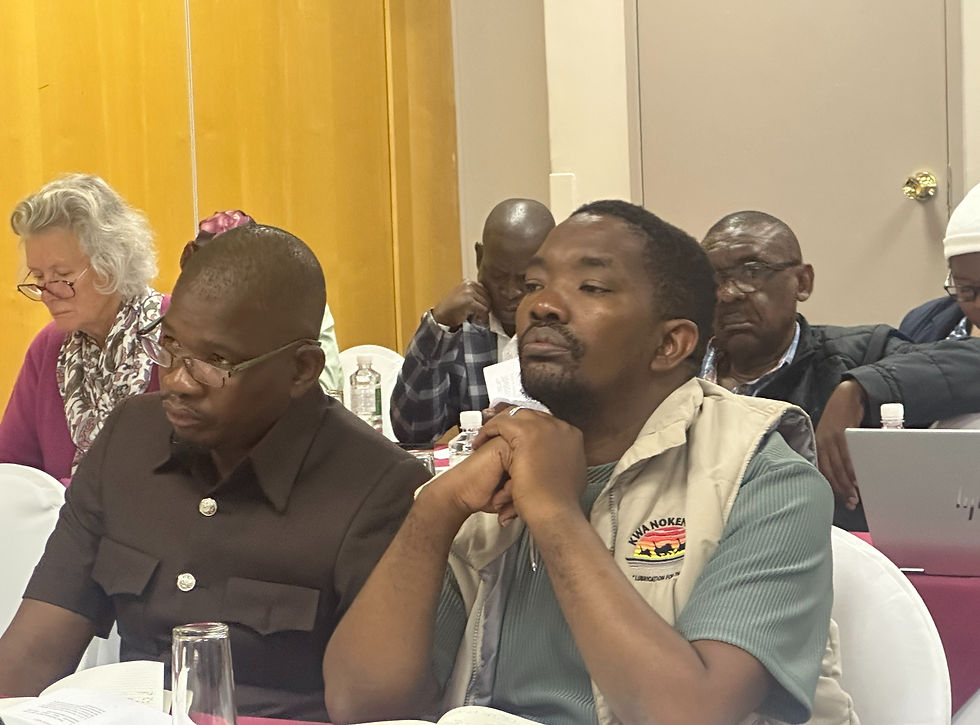
In a two day workshop organized by the Botswana Wildlife Producers Association (BWPA) and the Ngamiland Council of Nongovernmental Organisations (NCONGO), CBOS from Northern and Western Botswana rigorously went through the conditions imposed by the DWNP for the hunting of problem lions in a bid to ensure strict compliance, which would determine if the project goes ahead next year.
According to the DWNP, the experimental quota will inform lion management and mitigation of conflict. Under the program, nine CBOs in what is considered hot spots of Human Lion Conflict, (HLC), have been given one lion each to hunt under strict conditions. Failure to meet such conditions will result in denial of quota for the 2027 hunting season.
Under the conditions only male lions aged six years or older can be hunted. A mandatory detailed lion hunting report is to be presented to the DWNP complete with pictorial data such as the size of the skull, the, skin colour, the body measurement and dental record to determine the age of the hunted lion.
Other requirements include demonstration of equitable distribution of benefits of the hunt to members of the community especially those mostly affected by livestock losses by lions in the area or by using funds to construct socially useful infrastructure aimed at reducing opportunistic lion killings and incentivizing tolerance and coexistence with lions.
The CBOs are obliged to provide a report to the DWNP on benefit sharing by the 15th of October. The report must also contain details of lion status in the area and livestock losses to lions and other predators.
Under the program, communities and the participating Farmers Associations (NG39) are advised to negotiate with relevant hunting operators for a price not lower than P500,000 (five hundred thousand pula). So far all the participating CBOs have been able to sell their lions to operators although none has been hunted so far as the CBOs prepare themselves for compliance. As part of capacitation, NCONGO and BWPA will conduct a workshop for escort guides who will be working with the professional hunters.
The initiative by both NCONGO and BWPA is an effort to give impetus to Botswana’s policy of sustainable conservation which includes hunting, in the face of opposition by international anti-hunting lobby groups. It is informed by the Non-Detrimental Findings, (NDF) which is a scientific and management assessment that demonstrates among other things that the hunt would not impact negatively on the species survival. Such a study is required by CITES, the Convention on International Trade in Endangered Species before permits can be issued for hunting.
Botswana is estimated to have more than 3500 lions, which is the second largest in Africa. The increase in the numbers has led to the rise in retaliatory killings due to human wildlife conflict. The NDF has concluded that sustainable off take would not impact on the survival of the species. Consequently the DWNP said in the document that “it is therefore willing to reintroduce benefits for farmers and communities through tourist sport hunting and a limited quota, to test if the benefits accrued will improve attitudes and reduce retaliatory killings.” The last legal hunting in Botswana was conducted in 2014 before a blanket ban on all hunting was imposed. The experimental program is aimed at ensuring that affected communities derive sufficient benefits from trophy hunting proceeds with the hope to reduce retaliatory killings and ensure survival of the species. The NDF findings show that most lion human conflict occurs closer to national parks when lions target livestock. It observers that “resident lions living on the periphery of Conservation Zones, plus lions dispersing from the core areas of the Conservation Zones, are the source of these conflicts.” The experimental lion quotas is not meant to replace the current compensation process under which farmers are paid for the loss of their livestock. Such compensation to farmers had reached a total of more than six million pula (P6000, 000) by 2024. Further work is expected to be done by both NCONGO and BWPA, to capacitate communities to comply in order to enhance their chances of obtaining quotas for the 2027 hunting season.


Comments